

Key takeaways
- Recut edges in spring and touch them up every few weeks.
- Weed in short, frequent sessions, ideally after rain and before weeds set seed.
- Refresh faded mulch by raking and spot-filling instead of piling on new layers.
- Clear heavy leaf mats from beds in fall. Shredded leaves can serve as a light mulch.
Start With a Clean Edge
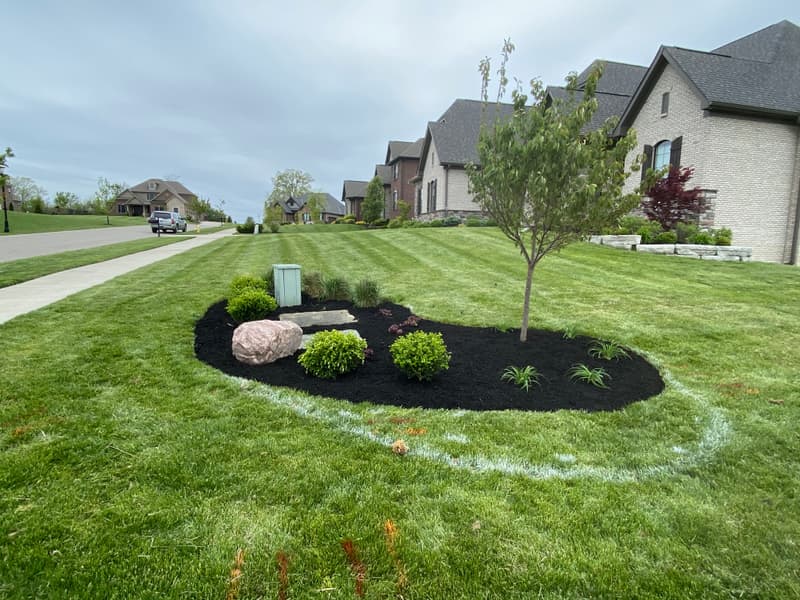
A sharp edge between lawn and bed does a lot for curb appeal, and it does practical work too. A clean cut line:
- keeps lawn grass from creeping into the bed
- holds mulch in place so it doesn't wash or get kicked onto the turf
- gives your mower and string trimmer a clear boundary
To keep edges clean:
- Recut in spring. Use a flat spade or half-moon edger to cut a clean, near-vertical line a few inches deep along the bed border. Pull out the grass and roots on the bed side.
- Touch up through the season. Cool-season turf grows fast in spring and fall. A quick pass every few weeks keeps the line from blurring.
- Keep mulch below the edge. Mulch that sits slightly below the lawn surface is less likely to spill onto the turf.
Pair edging with regular turf mowing and maintenance to keep both sides of the line sharp.
Set a Weeding Rhythm
Mulch suppresses weeds, but seeds still blow in and sprout on the surface, and some weeds push up from below. The trick is staying ahead of them.
- Go small and often. A short weeding pass every week or two during the growing season is far easier than a big cleanup every couple of months.
- Pull after rain. In moist soil, roots slide out whole. In dry clay, weeds tend to snap off at the soil line and regrow.
- Get them before they seed. One weed left to flower and drop seed can mean many more next year.
- Disturb the mulch as little as possible. Digging around brings buried weed seed to the surface. Pull the weed, then smooth the mulch back over the spot.
On larger commercial and HOA properties, a scheduled weeding cycle works better than waiting for complaints. See HOA and commercial grounds expectations for how bed care fits into a grounds program.
Keep Mulch Looking Fresh Without Overdoing It
Mulch fades and breaks down over time, which is part of how it builds soil. That does not mean you need a full new layer every time it looks dull.
- Rake to refresh. Lightly turning the top layer can brighten faded mulch and break up any crust.
- Spot-fill thin areas. Corners with heavy foot traffic, slopes, and areas under downspouts thin out first. Fill those instead of re-covering the whole bed.
- Check depth before topping up. OSU Extension recommends a total of 2 to 3 inches of hardwood bark mulch. Anything beyond that causes problems, especially when it is piled against trunks.
For timing and depth details, see When to Mulch in Southwest Ohio and How Deep Should Mulch Be?
Pruning Basics for Bed Plants
You do not need to be an expert to keep shrubs and perennials tidy. A few basics cover most situations:
- Remove dead, damaged, and diseased wood whenever you notice it.
- Know when your shrub blooms. Most spring-flowering shrubs set their buds the year before. If you prune them in late winter, you cut off this year's flowers. Prune them shortly after they finish blooming instead.
- Thin rather than shear. Cutting select branches back to a junction keeps a natural shape and lets light into the center. Constant shearing into tight shapes tends to create a dense outer shell with bare interiors.
- Tidy perennials. Removing spent flowers keeps beds neat. You can cut back browned foliage in fall or early spring.
- Avoid heavy pruning late in the season. Hard cuts late in the year can push tender new growth that is vulnerable to winter cold.
If plants have simply outgrown their space, more pruning will not fix it. That is a sign the bed may need a redesign.
Handling Leaves in Fall
Fall leaves are both a resource and a problem. A thick, wet mat of whole leaves can smother low perennials and groundcovers and hold moisture against plant crowns through winter. At the same time, leaves are organic matter, and southwest Ohio clay soils benefit from organic matter.
A balanced approach:
- Clear heavy mats from beds, especially over low plants and evergreen groundcovers.
- Shred what you keep. Shredded leaves break down faster and are less likely to mat. A thin layer under shrubs can work like a light mulch.
- Keep leaves off trunks and stems, just as you would with mulch.
- Do a final pass after most trees have dropped their leaves, then touch up mulch where it has thinned.
The fall cleanup checklist covers the rest of the end-of-season to-do list.
Putting It on a Schedule
A simple yearly pattern keeps beds clean:
- Spring: Recut edges and mulch.
- Summer: Weed every week or two and keep edges trimmed.
- All season: Prune each plant at the right time for its bloom cycle.
- Fall: Manage leaves and touch up thin mulch.
If keeping up feels like too much, Barefoot Landscaping offers mulch installation, a weed management program, spring and fall cleanup, and landscape bed design and installation. We serve homeowners and commercial properties in Monroe, Liberty Township, and West Chester.
For more on bed care, return to the mulch and landscape bed maintenance guide, or contact us to talk through your property.
Frequently asked questions
How often should I weed landscape beds?
During the growing season, a short pass every week or two keeps weeds small and easy to pull. Weeding after rain makes it easier to remove whole roots.
How often should bed edges be recut?
Recut edges in spring, then touch them up every few weeks while the lawn is actively growing. Cool-season grass grows fastest in spring and fall.
Should I leave fall leaves in my flower beds?
Clear thick, wet mats that can smother low plants. A thin layer of shredded leaves under shrubs can act as a light mulch and add organic matter.